
Sylwia! Ile w Tobie cierpliwości, wyobraźni i pracowitości! Piękna praca, gratulacje :) Pozdrawiam :)
Jakiś czas temu jedna z moich koleżanek poprosiła mnie o wypikowanie panelu, który chciała podarować mężowi pod choinkę. Dobrze, że nie zagląda na mojego bloga, bo inaczej nie mogłabym dziś pokazać tego projektu!
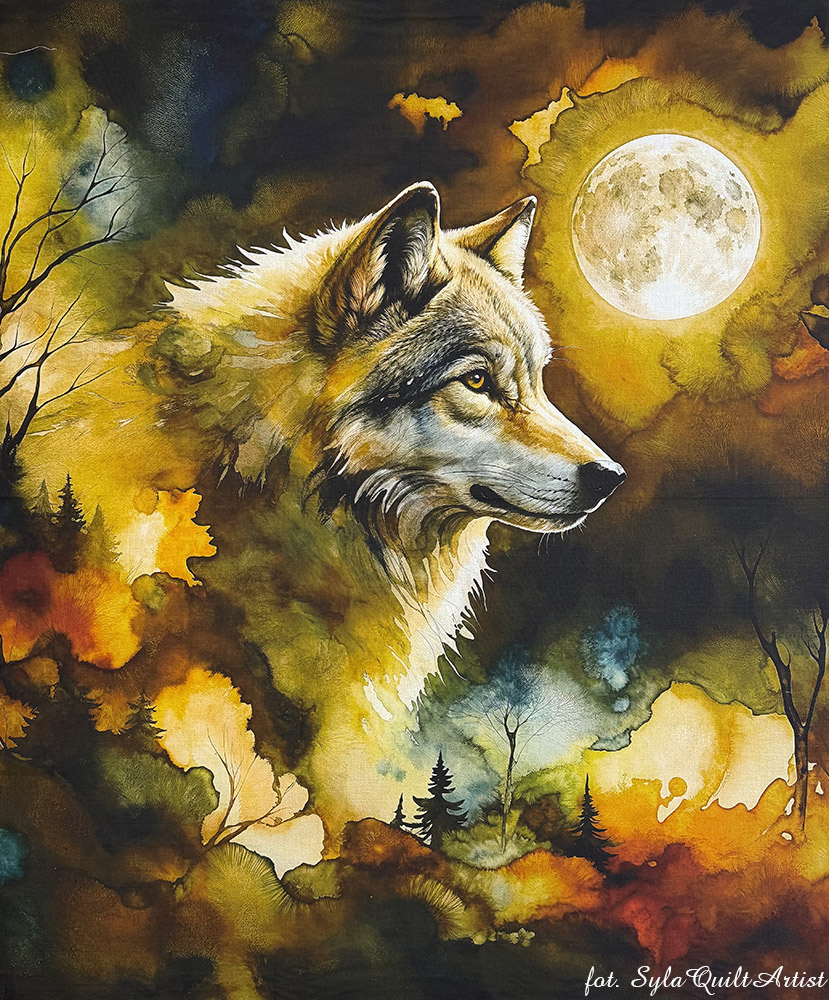
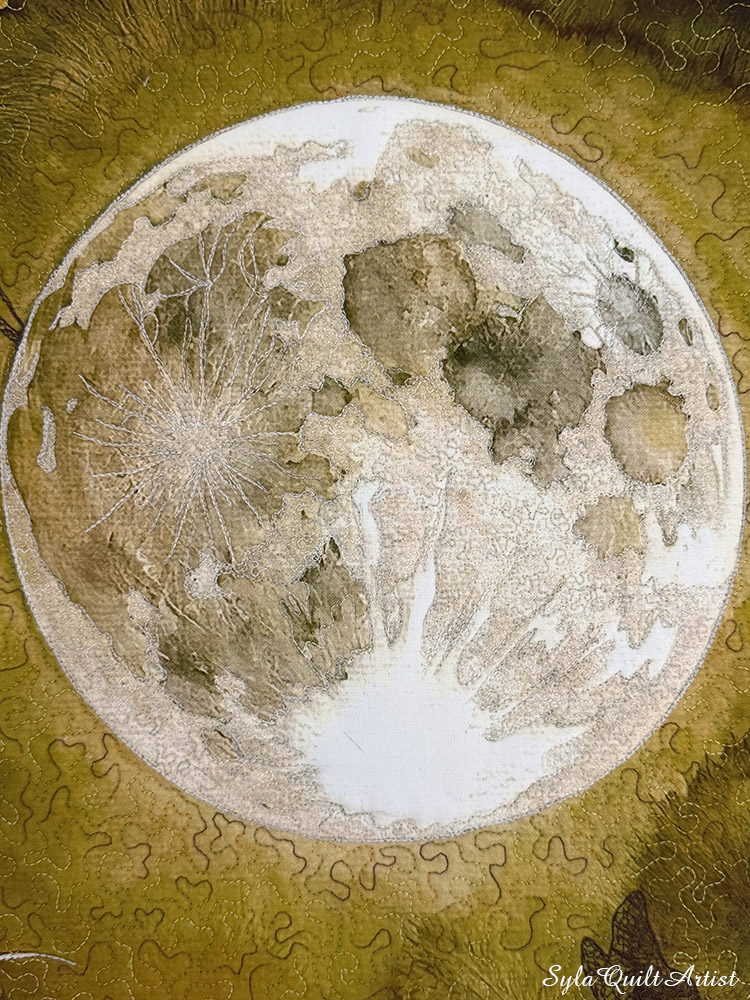
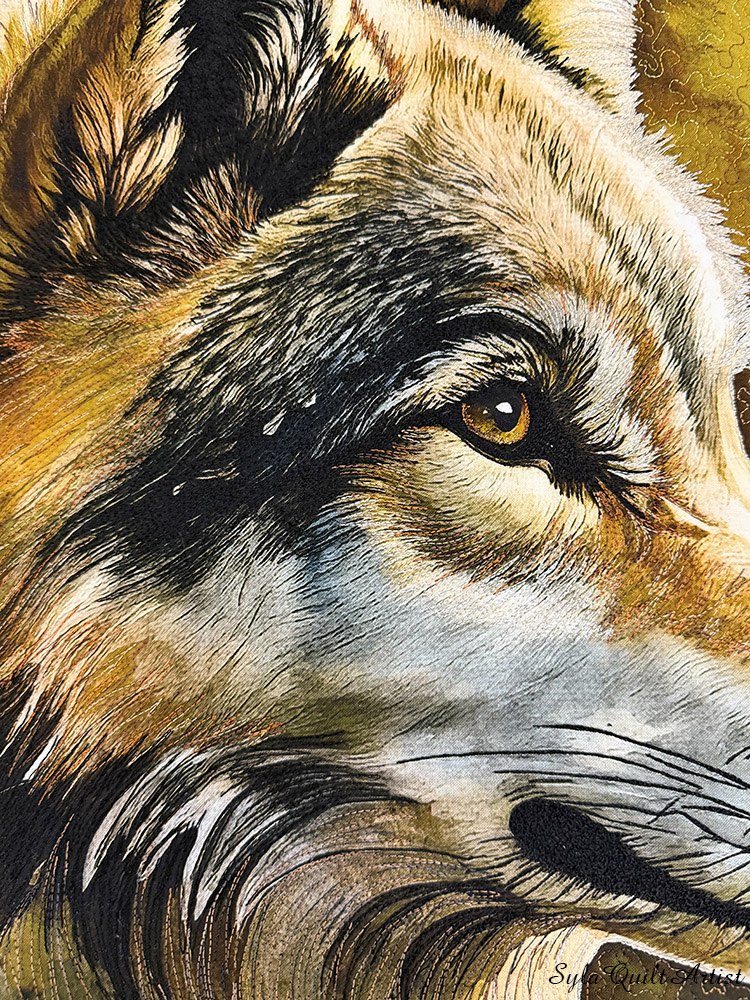
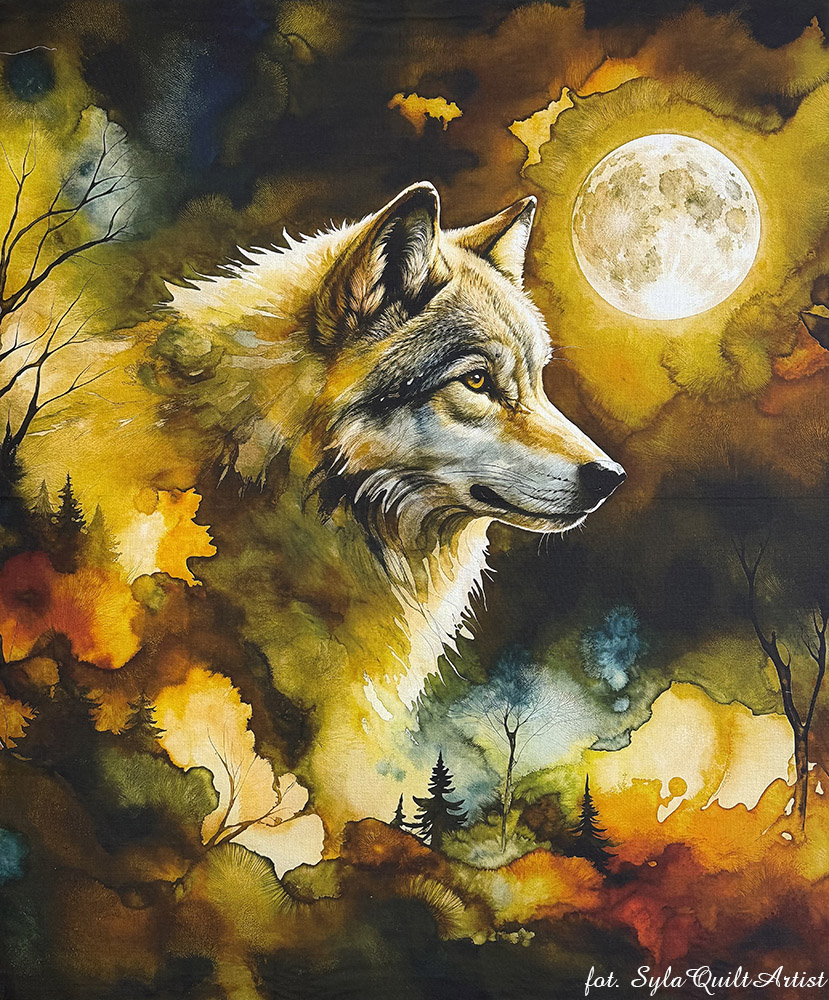
Panel przedstawiał wilka na tle pełnym rozmytych plam kolorów, z dużym księżycem świecącym nad jego głową. Sam wilk był pięknie namalowany, ale od razu pojawiło się pytanie: jak wypikować takie tło? Wilk i księżyc były oczywistymi bohaterami obrazu, lecz cała reszta wydawała się nieco tajemnicza i trudna do interpretacji.
Przyznam szczerze, że było to jedno z trudniejszych zadań, z jakimi przyszło mi się zmierzyć. Długo zastanawiałam się, jak nadać sens tym kolorowym plamom i jak sprawić, by stały się integralną częścią kompozycji.
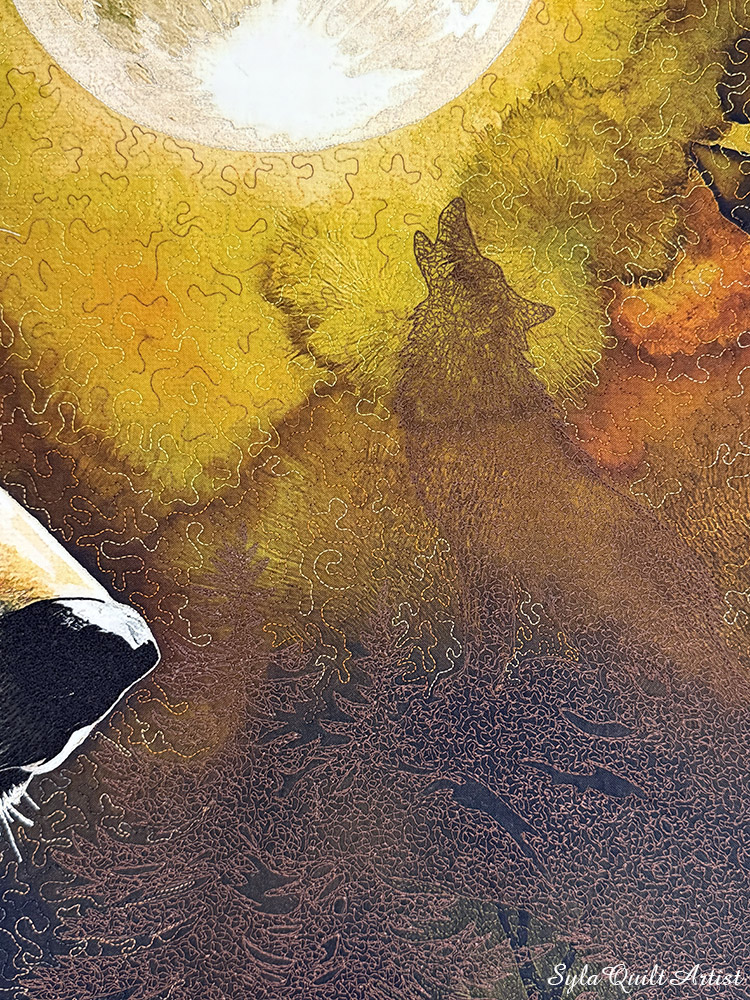
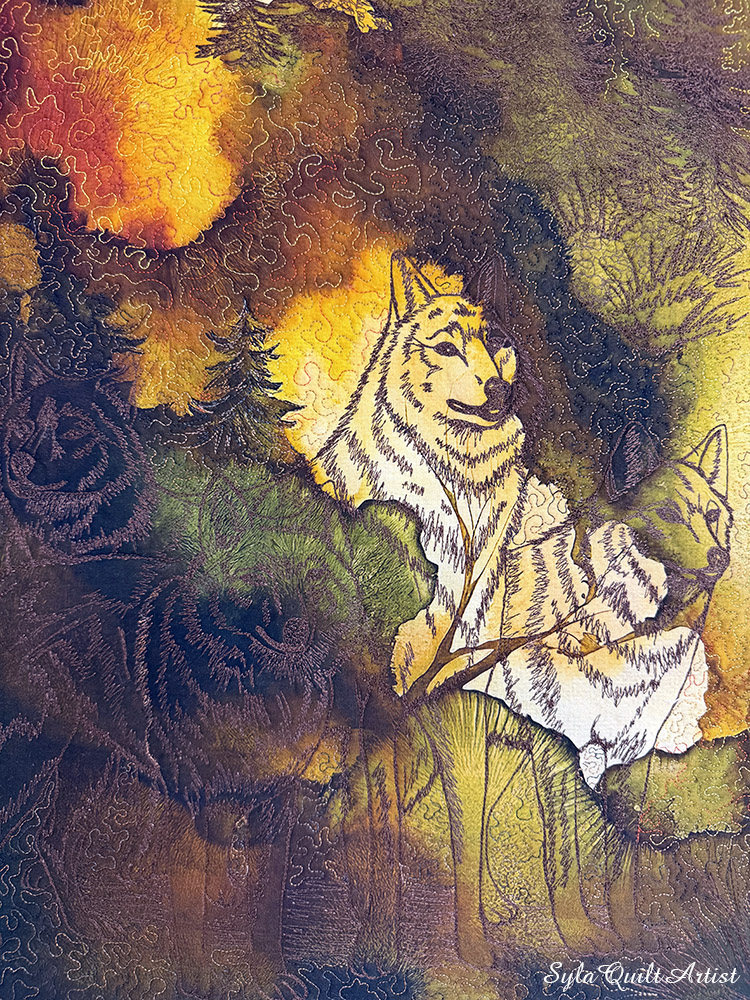
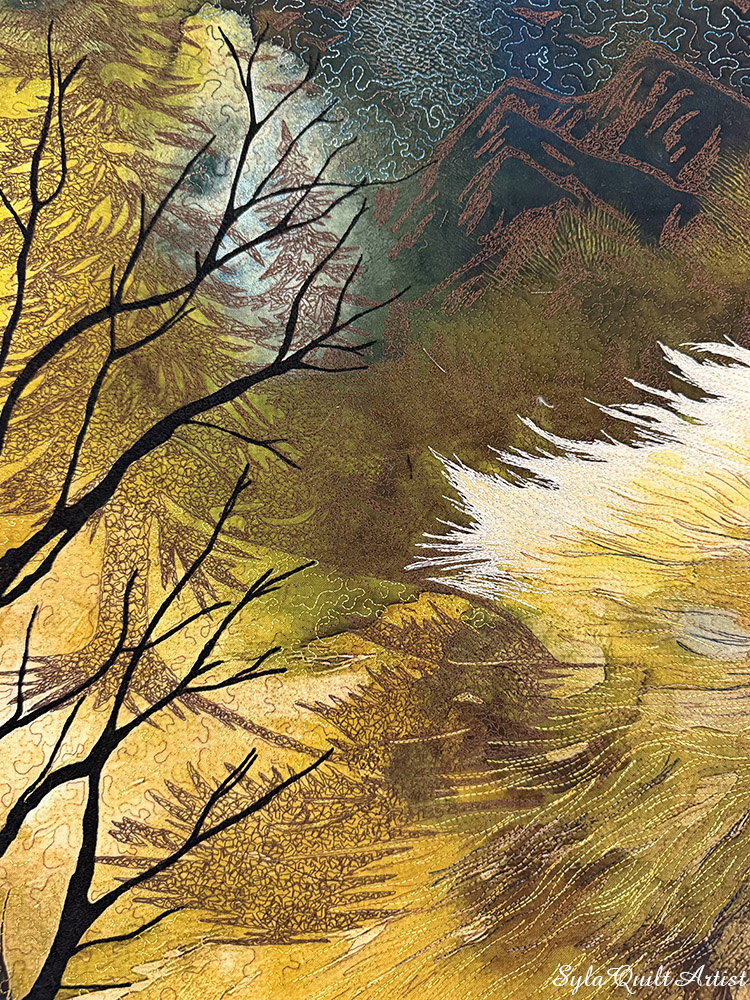
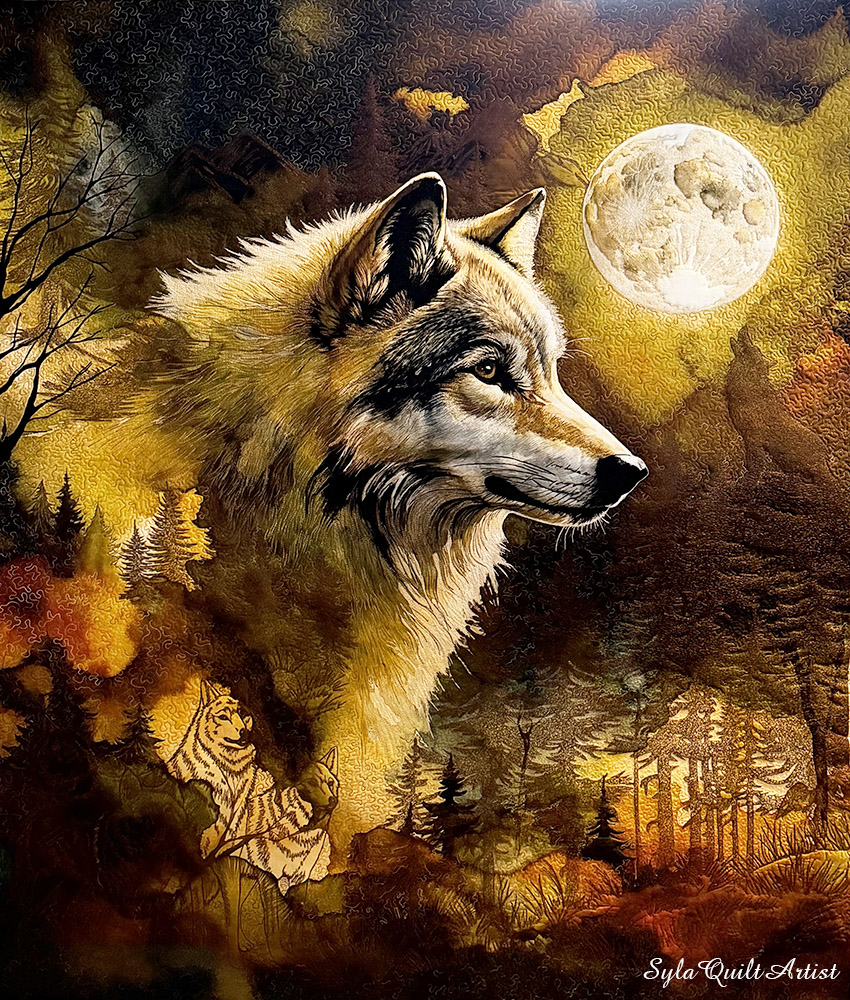
W końcu postanowiłam dopowiedzieć własną historię. W tle pojawiły się góry, las pełen choinek, wilki przemierzające leśne ścieżki oraz wilk wyjący do księżyca stojący na skale. Chciałam, aby widz mógł odkrywać kolejne szczegóły wraz z każdym spojrzeniem na obraz.
Pracę wykonałam w dwóch etapach. Najpierw wypikowałam wszystkie główne elementy z pełnym wypełnieniem: góry, drzewa, wilki, księżyc i pozostałe detale krajobrazu. Następnie usunęłam nadmiar wypełnienia i ponownie przygotowałam pracę do dalszego pikowania.
W drugim etapie pikowałam już znacznie subtelniej. Skupiłam się głównie na krawędziach motywów oraz miejscach, które wcześniej pozostały niepikowane. Dzięki temu uzyskałam efekt głębi i przestrzenności. Poszczególne elementy zaczęły się od siebie odcinać, a cały obraz nabrał trójwymiarowego charakteru.
Myślałam, że na tym moja przygoda z tym panelem się zakończy. Jednak niedługo później wydarzyło się coś, czego zupełnie się nie spodziewałam.
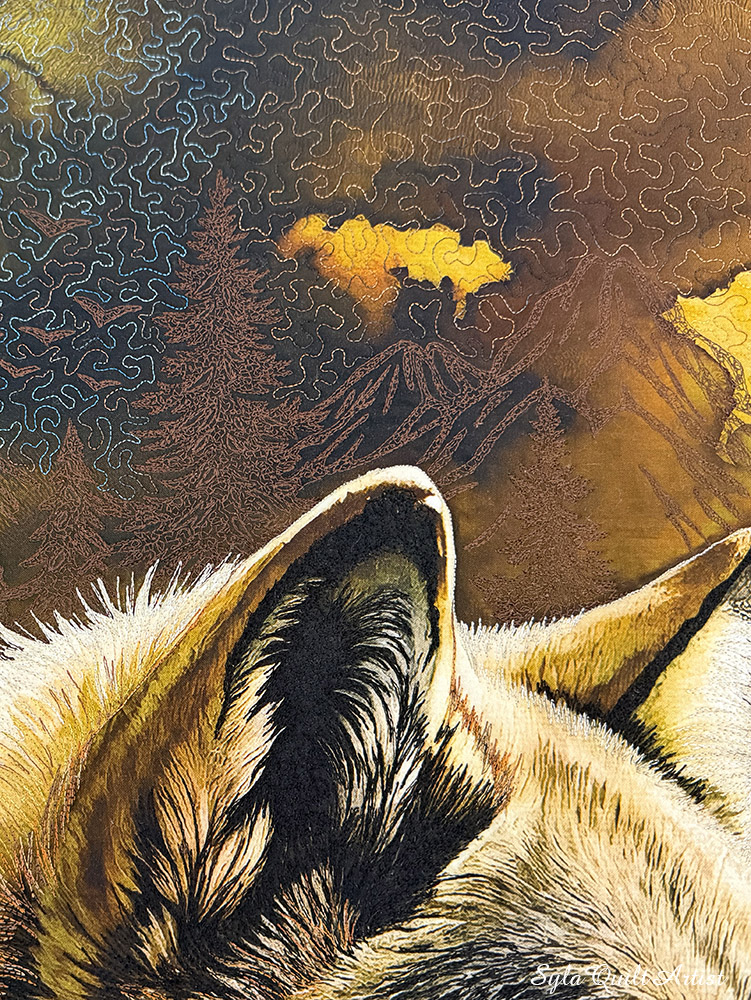
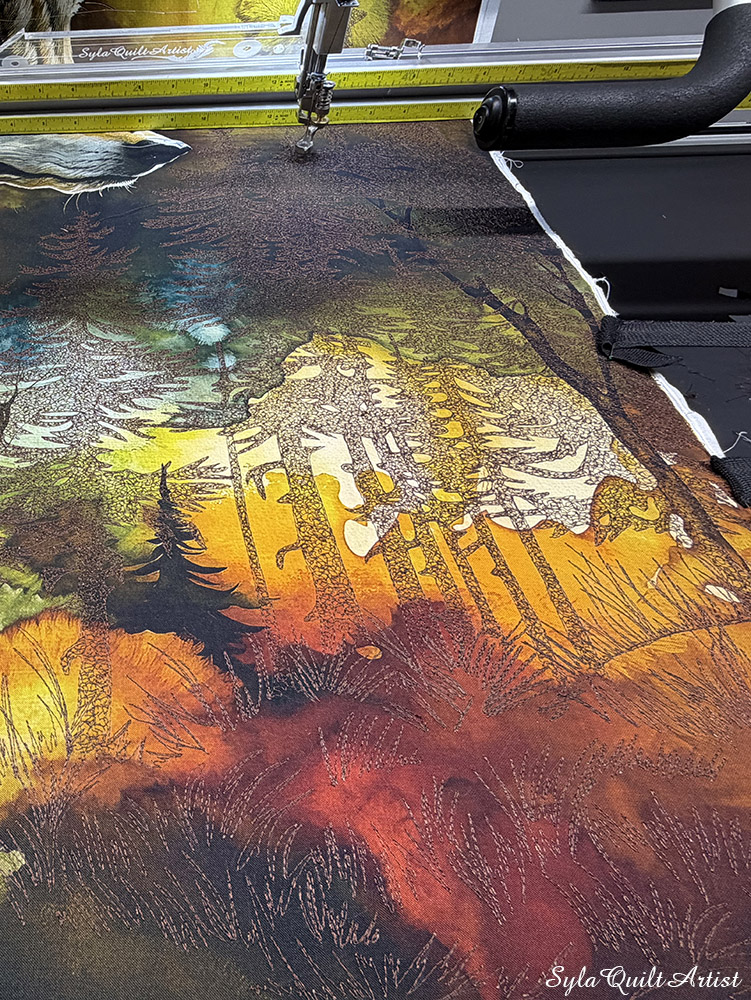
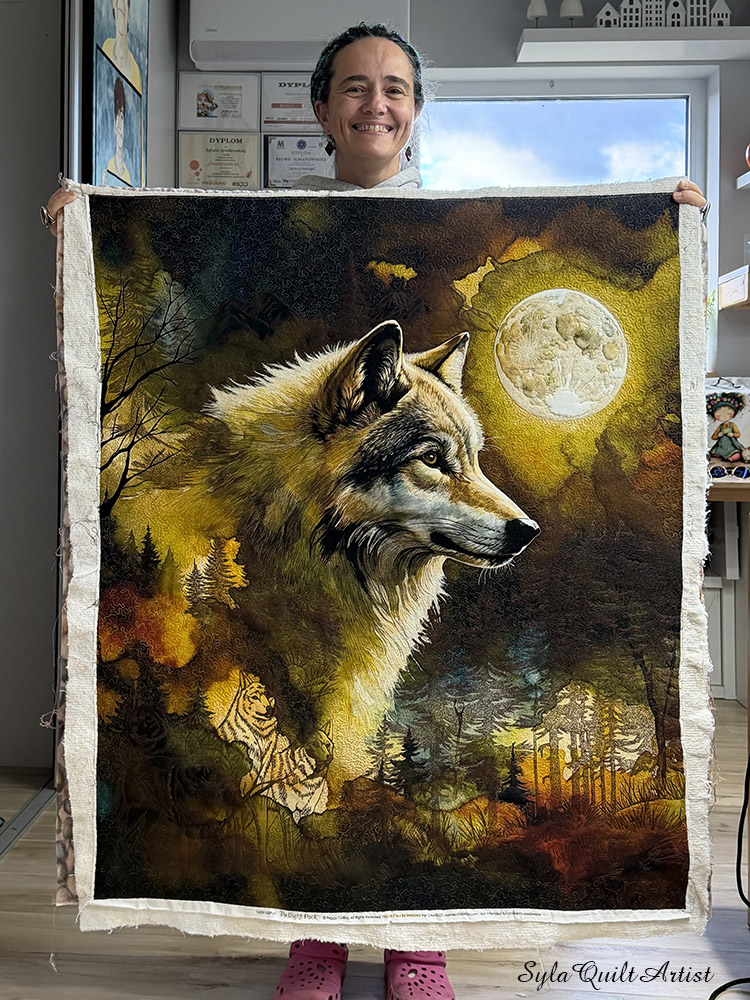
Druga koleżanka zobaczyła gotową pracę i tak bardzo spodobał jej się efekt, że przyniosła mi dokładnie taki sam panel z prośbą o wypikowanie go dla siebie.
I wtedy zaczęło się prawdziwe wyzwanie.
Nie miałam już problemu z techniką. Wiedziałam, że ponownie zastosuję ten sam sposób pracy i dwuetapowe pikowanie, które tak dobrze sprawdziło się za pierwszym razem. Problem był zupełnie inny. Nie chciałam kopiować własnego pomysłu.
Za każdym razem, gdy zaczynałam projektować kolejne elementy krajobrazu, moje myśli wracały do pierwszej wersji. Góry, drzewa, wilki, światło księżyca… wszystko podpowiadało mi rozwiązania, które już wcześniej wykorzystałam. Tymczasem zależało mi na tym, aby drugi obraz opowiadał inną historię.
To było zaskakująco trudne. Stworzyć pierwszy projekt jest łatwiej, bo ogranicza nas jedynie wyobraźnia. Przy drugim trzeba dodatkowo pilnować, aby nie powielać własnych ścieżek myślenia.
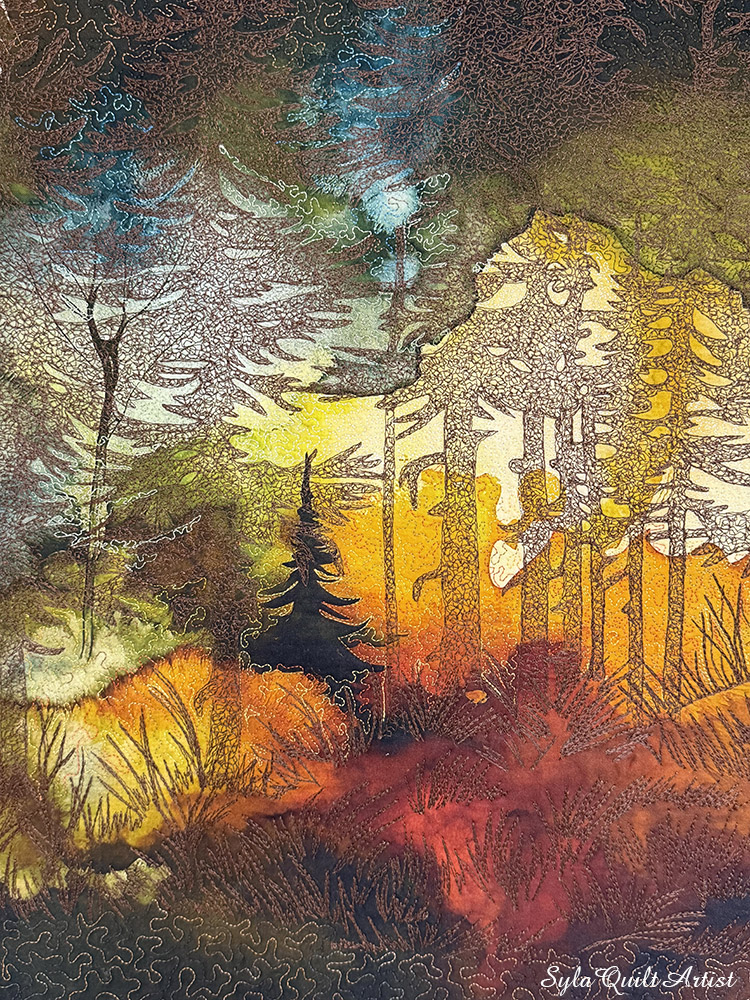
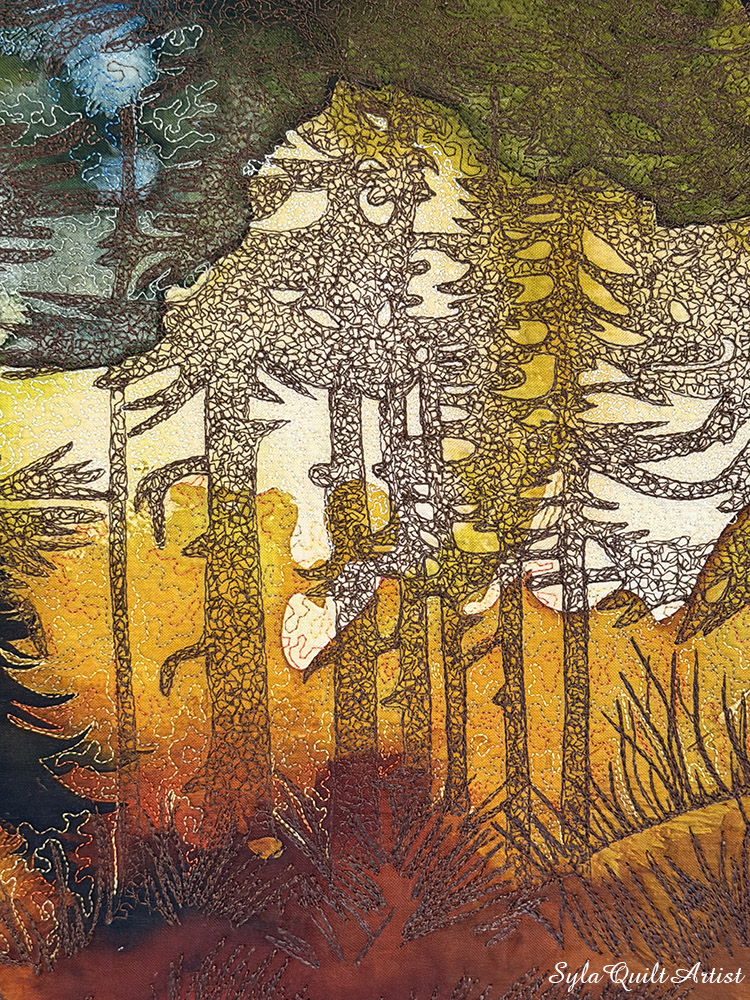
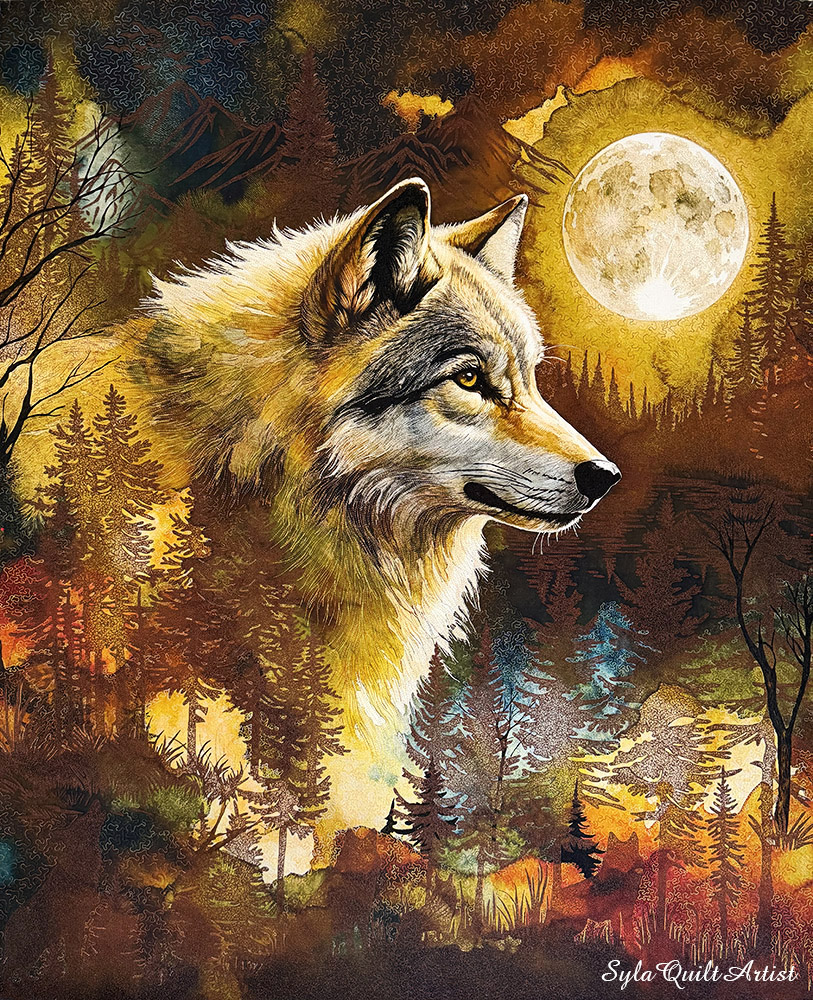
Ostatecznie powstała druga interpretacja tego samego panelu. Nadal opowiadała historię wilka i nocnego lasu, ale w zupełnie inny sposób. Tym razem skupiłam się bardziej na lesie, tworząc gęstszy krajobraz pełen drzew, światła i cieni. Efekt końcowy był inny, choć wykorzystałam tę samą technikę budowania przestrzeni.
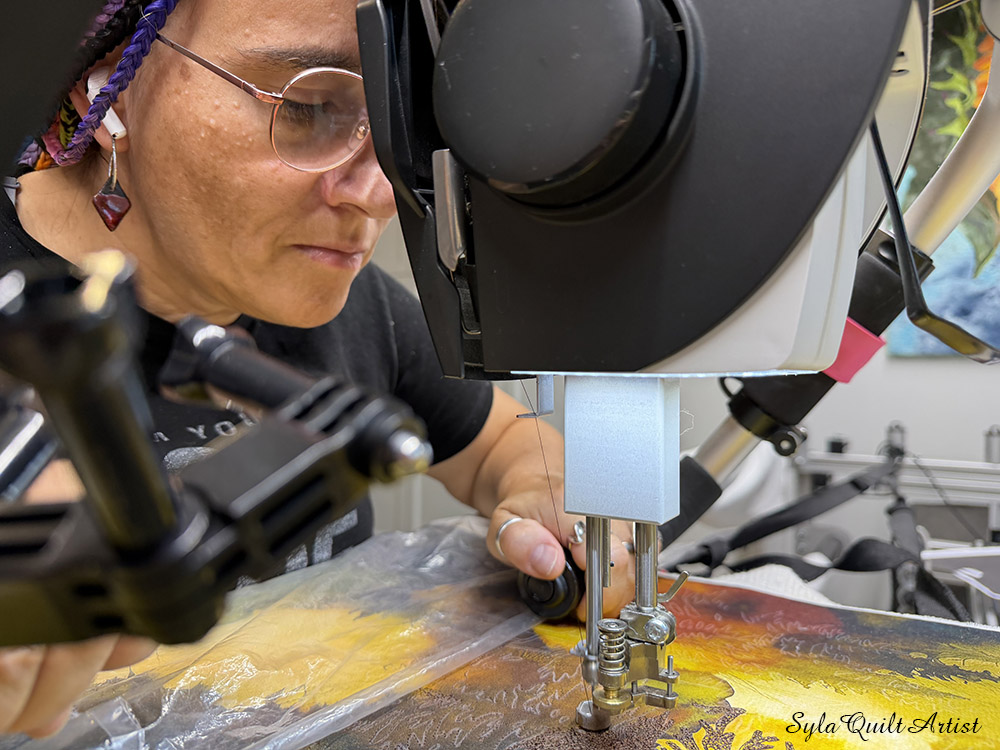
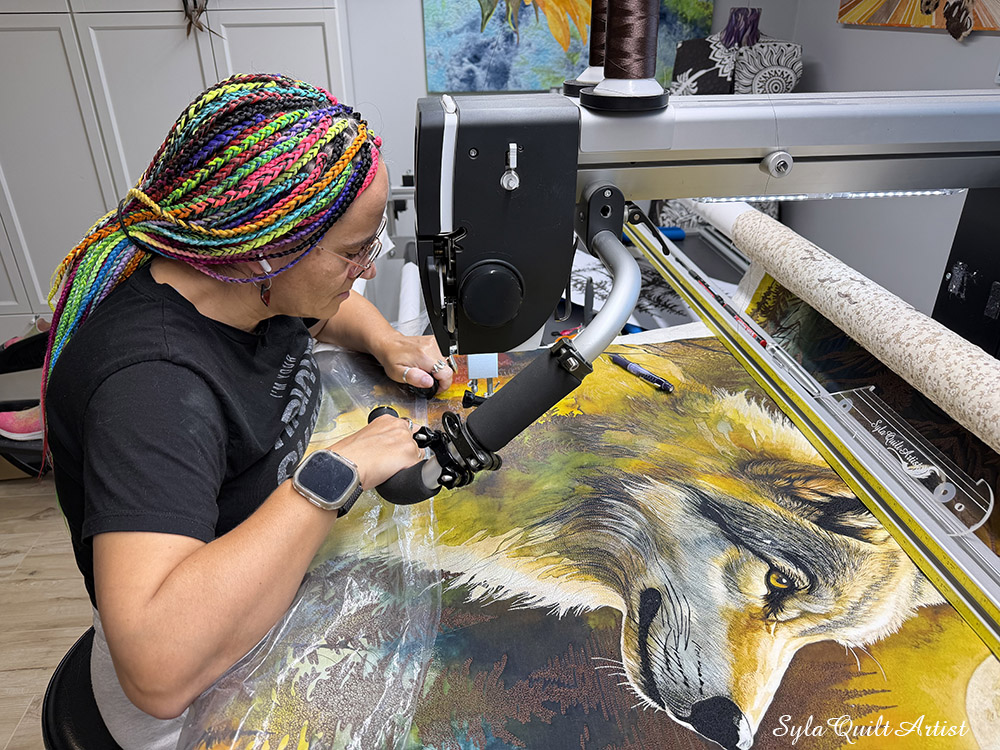
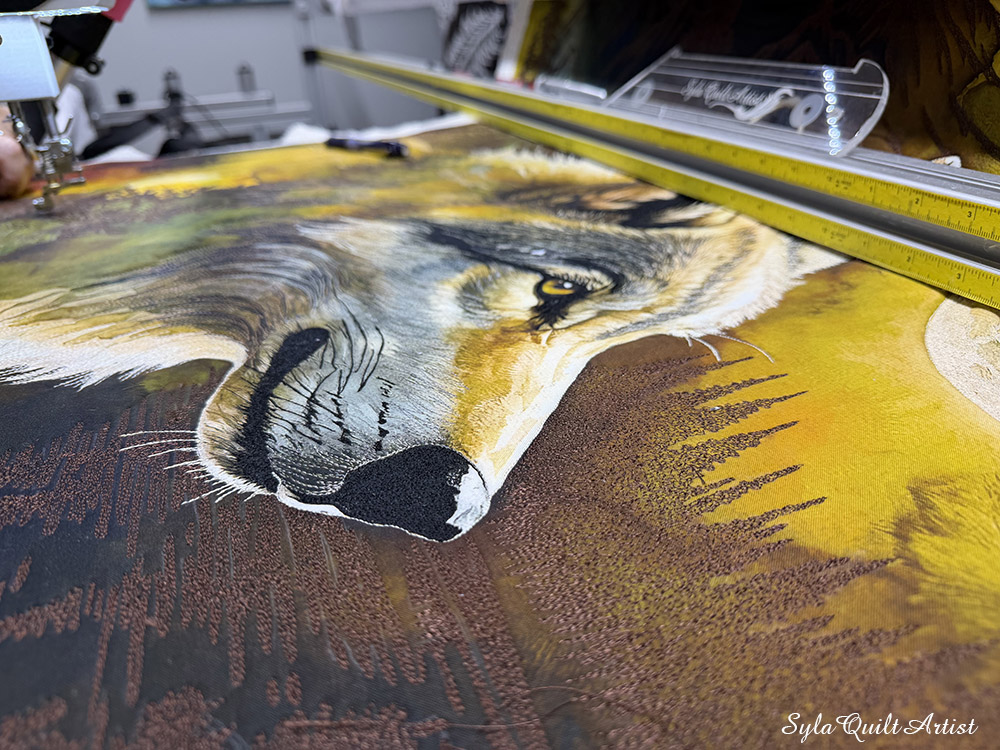
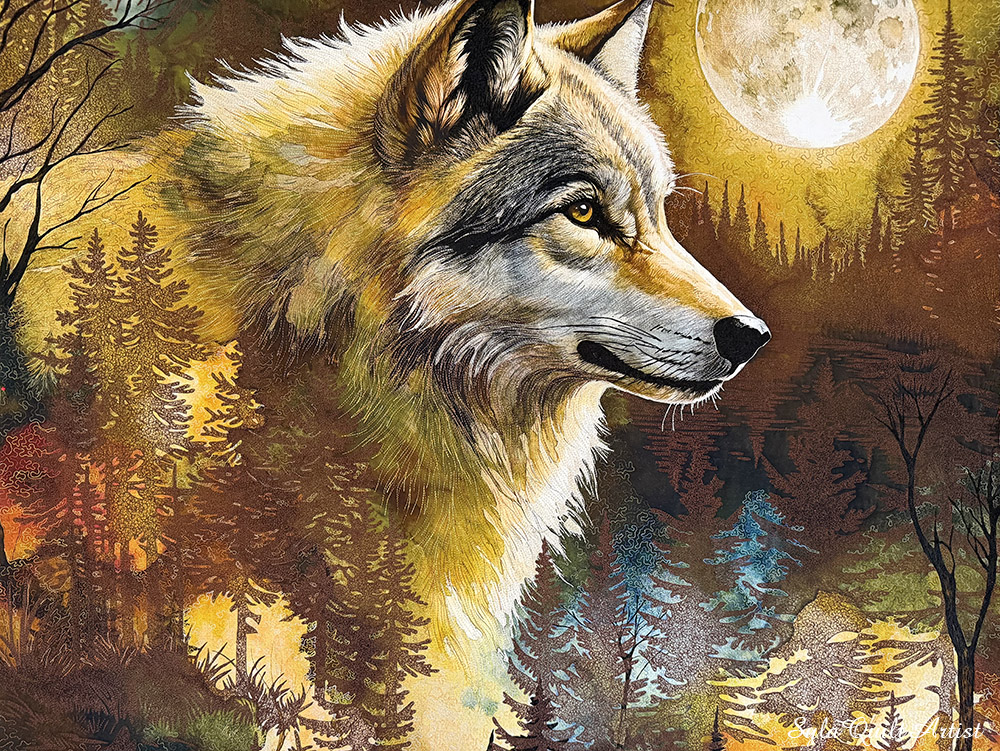
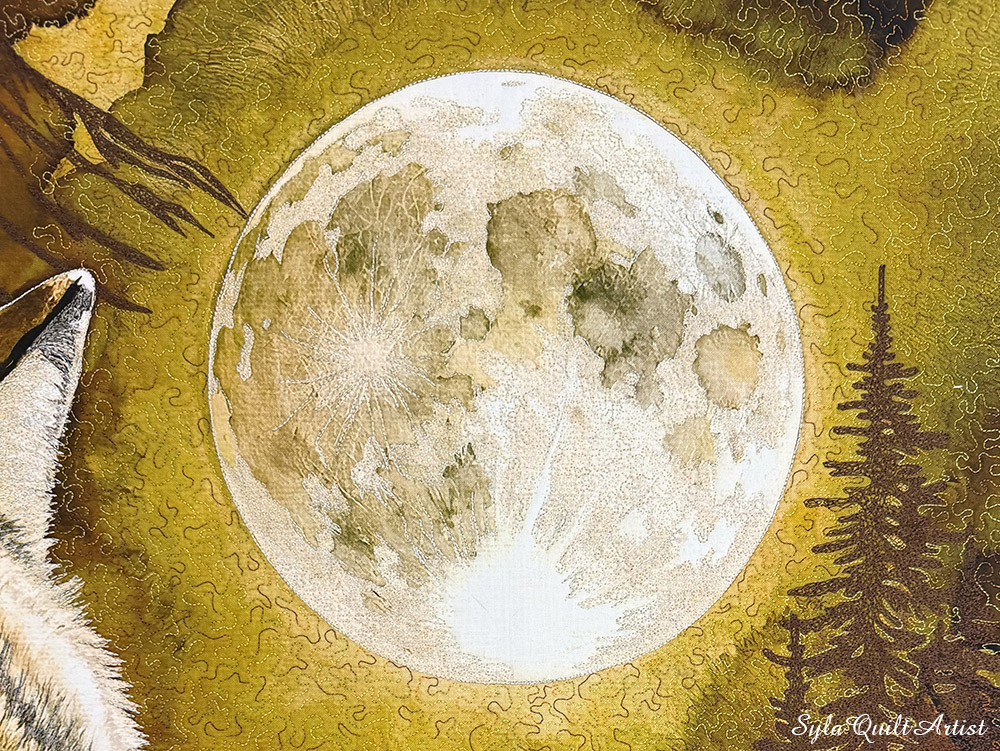
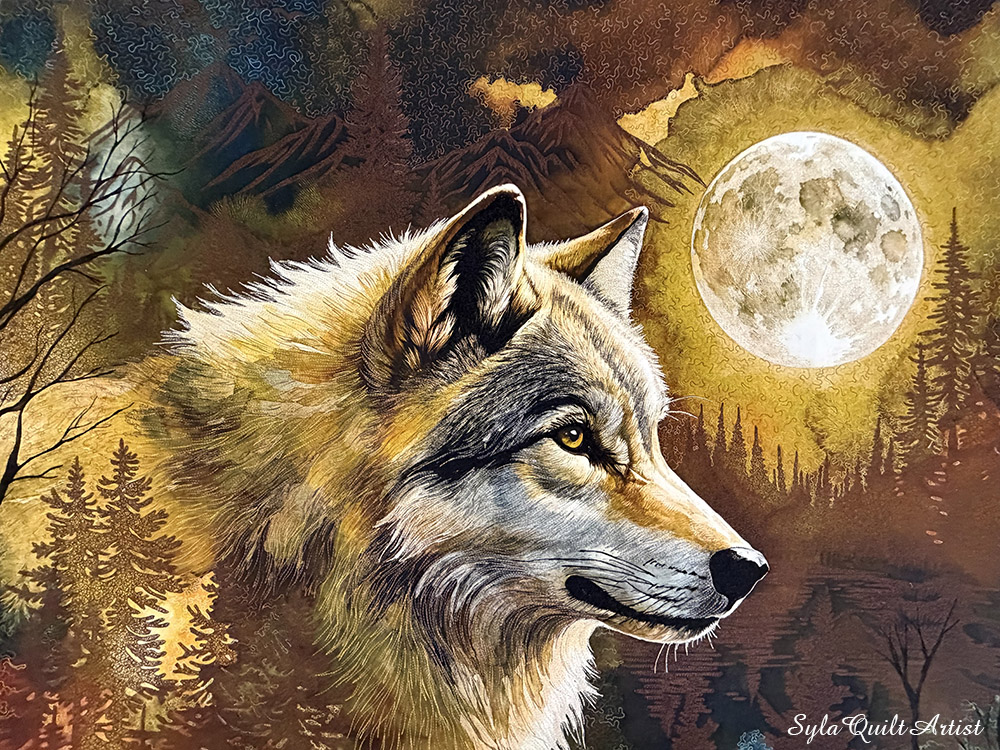
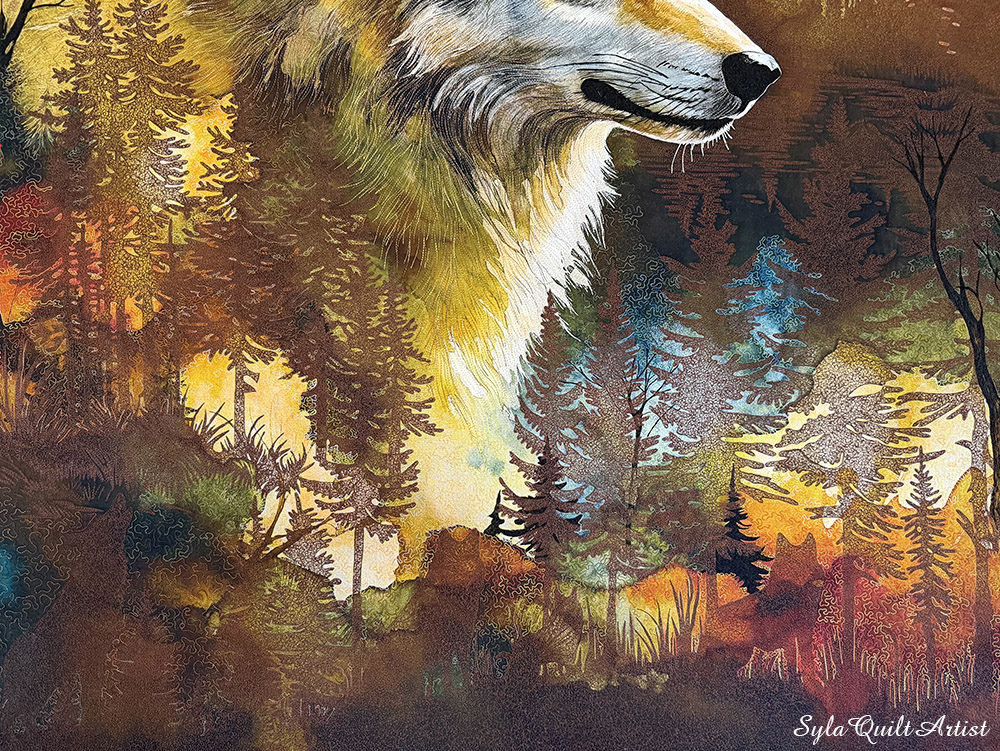
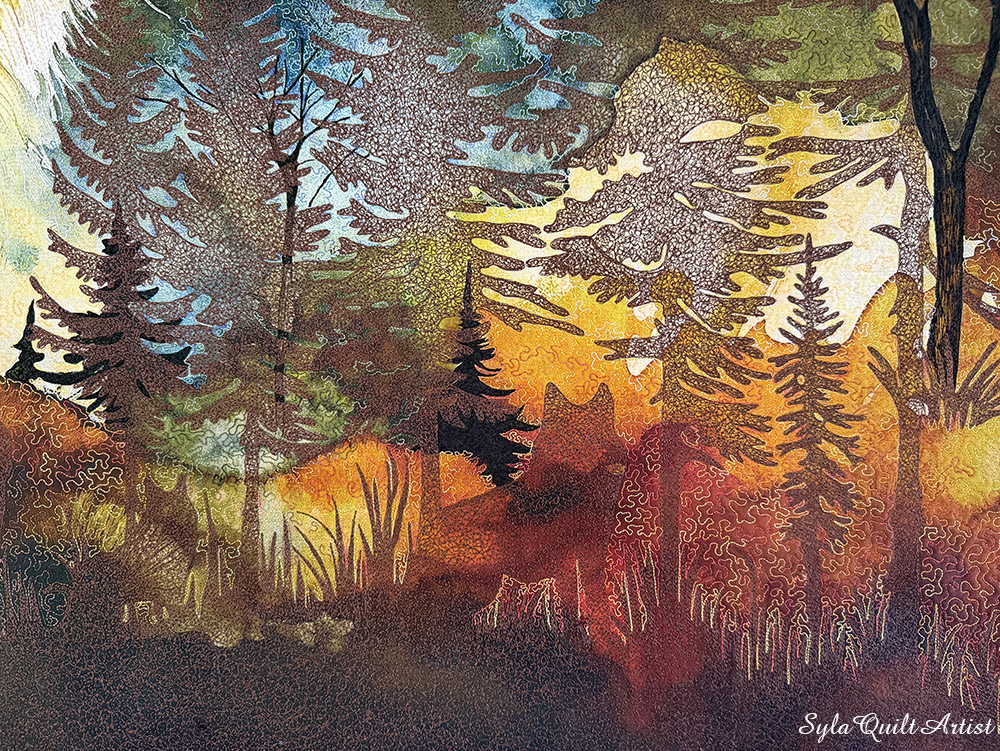
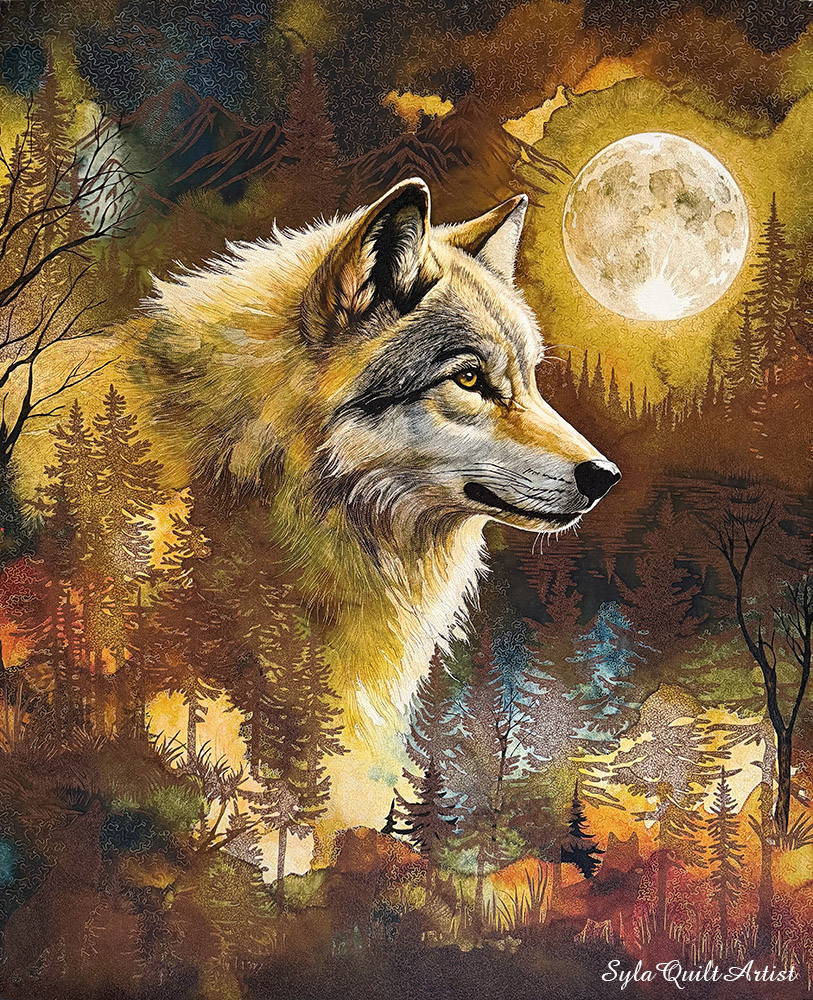
Patrząc dziś na oba obrazy, widzę jak bardzo pikowanie potrafi zmienić gotowy panel. Ten sam nadruk stał się podstawą dla dwóch różnych opowieści. I właśnie to najbardziej lubię w pikowaniu artystycznym. Igła i nitka nie tylko podkreślają wzór. Potrafią stworzyć historię, której wcześniej wcale tam nie było.
Która wersja bardziej Wam się podoba? Ta pierwsza, z wilkami ukrytymi wśród drzew, czy druga, w której główną rolę gra tajemniczy nocny las.
When the Background Becomes a Story
Some time ago, one of my friends asked me to quilt a panel she wanted to give her husband for Christmas. Fortunately, he doesn’t read my blog, otherwise I wouldn’t be able to share this project today!
The panel featured a wolf against a background of blurred colors, with a large moon shining above its head. The wolf itself was beautifully painted, but the question immediately arose: how should I quilt such a background? The wolf and the moon were obvious focal points, but everything else seemed mysterious and difficult to interpret.
I must admit that this was one of the more challenging projects I have worked on. I spent a long time wondering how to give meaning to those colorful patches and make them an integral part of the composition.
Eventually, I decided to tell my own story. Mountains appeared in the background, along with a forest full of pine trees, wolves wandering through woodland paths, and a wolf howling at the moon from a rocky outcrop. I wanted viewers to discover new details every time they looked at the piece.
I completed the work in two stages. First, I quilted all the major elements with full trapunto stuffing: the mountains, trees, wolves, moon, and other landscape details. Then I removed the excess stuffing and prepared the quilt for the second round of quilting.
During the second stage I quilted much more subtly, concentrating mainly on the edges of the motifs and the areas that had previously remained unquilted. This created depth and dimension. The individual elements began to stand out from one another, and the entire image gained a three-dimensional appearance.
I thought that my adventure with this panel had come to an end. However, shortly afterward, something happened that I completely did not expect.
Another friend saw the finished quilt and liked it so much that she brought me exactly the same panel and asked me to quilt it for her.
And that was when the real challenge began.
The technique was no longer the problem. I knew I would use the same two-stage quilting process that had worked so well the first time. The challenge was entirely different. I did not want to copy my own design.
Every time I started planning a new landscape element, my thoughts drifted back to the first version. Mountains, trees, wolves, moonlight… everything suggested ideas I had already used. Yet I wanted the second quilt to tell a different story.
Surprisingly, that was very difficult. Creating the first design is easier because the only limit is your imagination. With the second one, you must also make sure not to repeat your own creative path.
In the end, a second interpretation of the same panel emerged. It still told the story of a wolf and a forest at night, but in a completely different way. This time I focused more on the forest itself, creating a denser landscape filled with trees, light, and shadows. The final result was different, even though I used the same technique to build depth and dimension.
Looking at both quilts today, I can clearly see how much quilting can transform a printed panel. The same fabric became the foundation for two completely different stories. And that is what I love most about art quilting. Needle and thread do much more than enhance a design. They can create a story that was never there before.
Which version do you prefer? The first one, with wolves hidden among the trees, or the second one, where the mysterious nighttime forest plays the leading role?
Wenn der Hintergrund zur Geschichte wird
Vor einiger Zeit bat mich eine Freundin, ein Panel zu quilten, das sie ihrem Mann zu Weihnachten schenken wollte. Zum Glück liest er meinen Blog nicht, sonst könnte ich dieses Projekt heute nicht zeigen!
Das Panel zeigte einen Wolf vor einem Hintergrund aus verschwommenen Farbflecken, über dem ein großer Mond leuchtete. Der Wolf selbst war wunderschön gestaltet, doch sofort stellte sich die Frage: Wie soll man einen solchen Hintergrund quilten? Der Wolf und der Mond waren die offensichtlichen Hauptmotive, aber der Rest wirkte geheimnisvoll und schwer zu deuten.
Ich muss ehrlich sagen, dass dies eine der schwierigeren Aufgaben war, vor denen ich bisher gestanden habe. Lange überlegte ich, wie ich diesen Farbflecken Bedeutung verleihen und sie zu einem festen Bestandteil der Komposition machen könnte.
Schließlich beschloss ich, meine eigene Geschichte zu erzählen. Im Hintergrund entstanden Berge, ein Wald voller Tannen, Wölfe auf ihren Wegen durch den Wald und ein Wolf, der auf einem Felsen stehend den Mond anheult. Ich wollte, dass der Betrachter bei jedem Blick neue Details entdeckt.
Die Arbeit erfolgte in zwei Schritten. Zuerst quiltete ich alle Hauptelemente mit vollständiger Trapunto-Füllung: Berge, Bäume, Wölfe, Mond und weitere Details der Landschaft. Anschließend entfernte ich die überschüssige Füllung und bereitete die Arbeit für den zweiten Quiltvorgang vor.
Im zweiten Schritt quiltete ich deutlich zurückhaltender. Ich konzentrierte mich vor allem auf die Konturen der Motive und auf Bereiche, die zuvor unquiltet geblieben waren. Dadurch entstand Tiefe und Räumlichkeit. Die einzelnen Elemente hoben sich voneinander ab, und das gesamte Bild erhielt eine dreidimensionale Wirkung.
Ich dachte, damit wäre meine Reise mit diesem Panel beendet. Doch kurze Zeit später geschah etwas, womit ich überhaupt nicht gerechnet hatte.
Eine andere Freundin sah die fertige Arbeit und war davon so begeistert, dass sie mir genau dasselbe Panel brachte und mich bat, es ebenfalls für sie zu quilten.
Und genau da begann die eigentliche Herausforderung.
Mit der Technik hatte ich kein Problem mehr. Ich wusste, dass ich dieselbe zweistufige Methode anwenden würde, die beim ersten Mal so gut funktioniert hatte. Die Herausforderung war eine andere: Ich wollte meine eigene Idee nicht kopieren.
Jedes Mal, wenn ich neue Landschaftselemente plante, musste ich an die erste Version denken. Berge, Bäume, Wölfe und Mondlicht führten mich immer wieder zu Lösungen zurück, die ich bereits verwendet hatte. Dabei sollte die zweite Arbeit eine ganz andere Geschichte erzählen.
Das war überraschend schwierig. Das erste Design zu entwickeln ist einfacher, weil nur die Fantasie Grenzen setzt. Beim zweiten muss man zusätzlich darauf achten, die eigenen gestalterischen Wege nicht zu wiederholen.
Am Ende entstand eine zweite Interpretation desselben Panels. Sie erzählte ebenfalls die Geschichte eines Wolfes und eines nächtlichen Waldes, jedoch auf ganz andere Weise. Dieses Mal richtete ich den Fokus stärker auf den Wald selbst und erschuf eine dichtere Landschaft voller Bäume, Licht und Schatten. Das Endergebnis war anders, obwohl dieselbe Technik verwendet wurde, um Tiefe und Räumlichkeit zu erzeugen.
Wenn ich heute beide Arbeiten betrachte, wird mir bewusst, wie stark Quilting ein fertiges Panel verändern kann. Derselbe Stoffdruck wurde zur Grundlage für zwei völlig unterschiedliche Geschichten. Und genau das liebe ich am künstlerischen Quilten. Nadel und Faden betonen nicht nur ein Motiv. Sie können eine Geschichte erschaffen, die vorher überhaupt nicht vorhanden war.
Welche Version gefällt euch besser? Die erste mit den zwischen den Bäumen versteckten Wölfen oder die zweite, in der der geheimnisvolle nächtliche Wald die Hauptrolle spielt?

Pięknie to uszyłaś Sylwio... pięknie! I panele sama projektujesz! Świetna praca, gratuluję :) Pozdrawiam :)
Dear Lenka, Thank you very much for your lovely message — I’m happy to hear that you enjoyed the event.…
It this wonderfull. It is possible take part next year? Thank your very mutch. Nice days Lenka Satrova
Jolciu bardzo Ci dziękuję za tak milę słowa ❤️❤️❤️❤️


Dodaj komentarz